Best Track Lighting for Retail Spaces: A Practical Comparison for Bright, Professional Displays
Disclosure: This post may contain affiliate links. We may earn a commission on qualifying purchases at no extra cost to you.
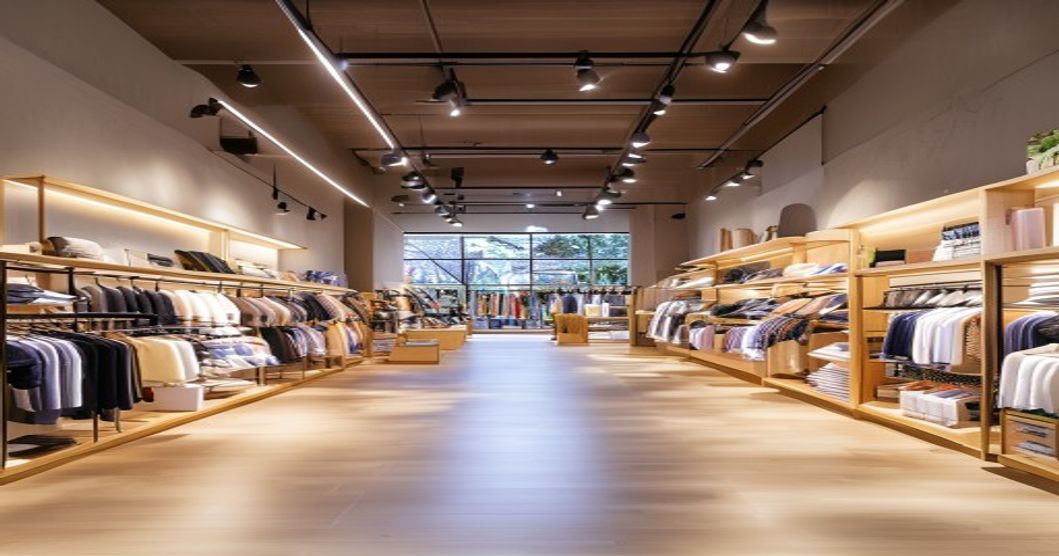
There’s something magical about walking into a retail space and instantly knowing where to look. The lighting isn’t fancy or flashy—it just works. The merchandise catches your eye, the aisles feel inviting, and somehow you end up browsing longer than you planned. That’s no accident. Good track lighting is doing the heavy lifting behind the scenes.
If you run a boutique, gallery, bookstore, or any retail space, track lighting is often your best bet. It’s flexible, controllable, and honest—it shows your products in their best light without being obvious about it. But the market has gotten crowded, and picking the right system means weighing a few real trade-offs: fixture types, rail compatibility, color temperature, and how messy the installation will be.
The Main Options: Track Systems Head-to-Head
Let me walk you through the real-world choice. You’re not picking between dozens of minor variants—you’re weighing a handful of system types. Each has genuine strengths and real drawbacks.
| Track System Type | Installation Difficulty | Fixture Flexibility | Cost Range | Best For |
|---|---|---|---|---|
| Single-Circuit Monorail (simple power loop) | Easy; surface or flush mount | High; fixtures slide freely, rotate 360° | Typically $200–$500+ for 8 ft (check current pricing) | Small displays, accent lighting, galleries |
| Three-Circuit Rail (switchable zones) | Moderate; requires separate switches | High; organize fixtures into 3 independent zones | Typically $400–$900+ for 8 ft (check current pricing) | Full retail floors; different lighting scenes |
| Low-Voltage Monorail (transformer-fed) | Easy installation; thin, elegant rail | Very high; smaller fixtures, fine control | Typically $150–$400+ for 8 ft (check current pricing) | High-end galleries, jewelry, art lighting |
| Plug-and-Play Wall Sconces (pre-wired cord) | Very easy; no rewiring | Low; fixed position, limited adjustability | Typically $100–$300+ per fixture (check current pricing) | Temporary setups, budget-tight stores |
Single-Circuit Monorail: Simple and Flexible
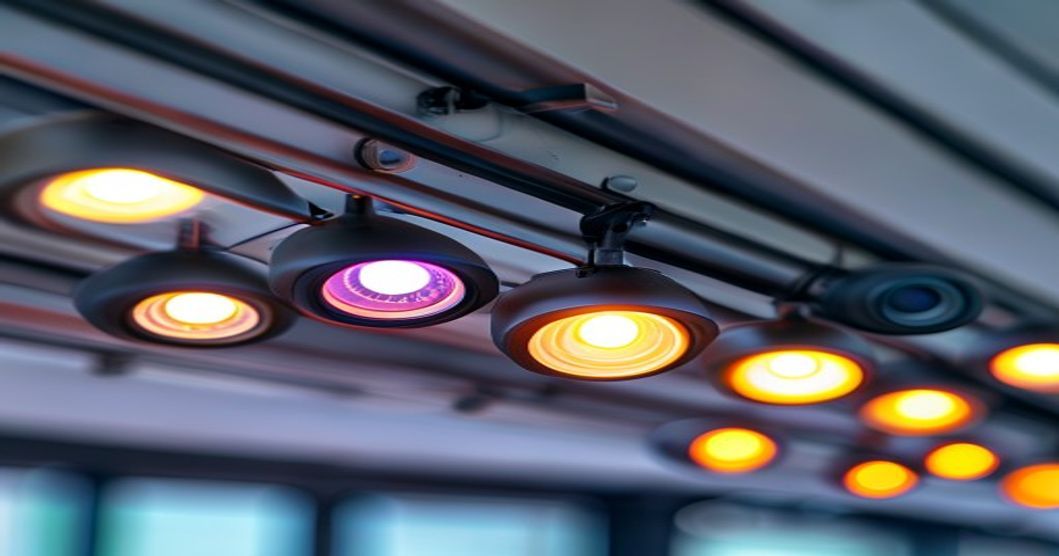
A monorail is one continuous loop of conductive rail—think of it as a single power highway. All fixtures on it share the same circuit, so they turn on and off together. You can’t dim one section independent of another without adding dimmers to individual fixtures (doable, but costs more).
Here’s what makes it shine: fixtures clip and slide anywhere along the rail with zero fuss. You can rearrange your display layout in minutes, swivel lights to follow your changing merchandise, and add or remove fixtures without touching the wall. For a boutique owner who likes to refresh displays monthly, this is liberating.
The catch: one switch means one light level for the whole run. If you have a 20-foot retail floor, you either light it all evenly or not at all. That’s fine for a focused accent area; it’s limiting for a full store.
Three-Circuit Rail: The Zone Control Advantage
Three-circuit (or multi-circuit) rail splits power into three separate electrical runs built into one physical rail. You wire each circuit to its own switch and dimmer. Now you can dim the fitting room, brighten the display wall, and leave the stockroom soft.
For a typical retail space, this pays off. You get real scene control—morning ambient light, midday brightness to drive sales, evening atmosphere. Most shop owners tell us this flexibility was a feature they didn’t fully appreciate until they actually used it.
The trade-off: installation is trickier (three separate runs to wire, three switch locations). Cost runs roughly double a basic monorail. And you’re locked in—rewiring for a different zone layout later is a headache.
Low-Voltage Monorail: Premium Control, Elegant Look
Low-voltage systems use a transformer to step down standard house current (120V) to 12V along the rail. The rail itself stays thinner and more refined, and fixtures are smaller and lighter.
Why pick it: jewelry stores and fine-art galleries love this because the thin rail barely shows and small spotlights can be positioned with surgical precision. The visual clutter is minimal. If your retail space is design-forward and you’re willing to pay for elegance, it’s genuinely beautiful.
Reality check: you need a transformer (typically $150–$300+, depending on capacity), and the 12V fixtures themselves cost more per unit. It’s a premium choice, not a budget play. Also, low-voltage systems have shorter effective cable runs (transformers lose efficiency over distance), so a longer retail space may need multiple transformers.
LED vs. Halogen: The Switch That Happened
Ten years ago, this was a real argument. Today, LED wins for almost all retail applications.
Halogen track lights are warm, flattering, and familiar. They’ve lit retail spaces for decades. But they’re also way less efficient than LED (they gobble energy for equivalent light output), run hot (a real concern near fabrics or paper products), and require frequent bulb replacements. In a busy retail store running lights many hours a day, you’ll be swapping bulbs constantly.
LED track lights use a fraction of the energy, produce the same warm color (2700K is standard), last significantly longer, and stay cool. The upfront cost is higher, but the operating cost savings are substantial—typically the system pays for itself within a few years in a medium retail space. Plus, you’ll spend way less time and effort on maintenance.
If you’re opening a new store or retrofitting, LED is the practical choice. If you have a halogen system running beautifully right now, you don’t need to rip it out tomorrow. But any new installation should be LED, period.
Color Temperature and Beam Angle Matter More Than You’d Think
Two specs that sound technical actually change how customers feel in your space.
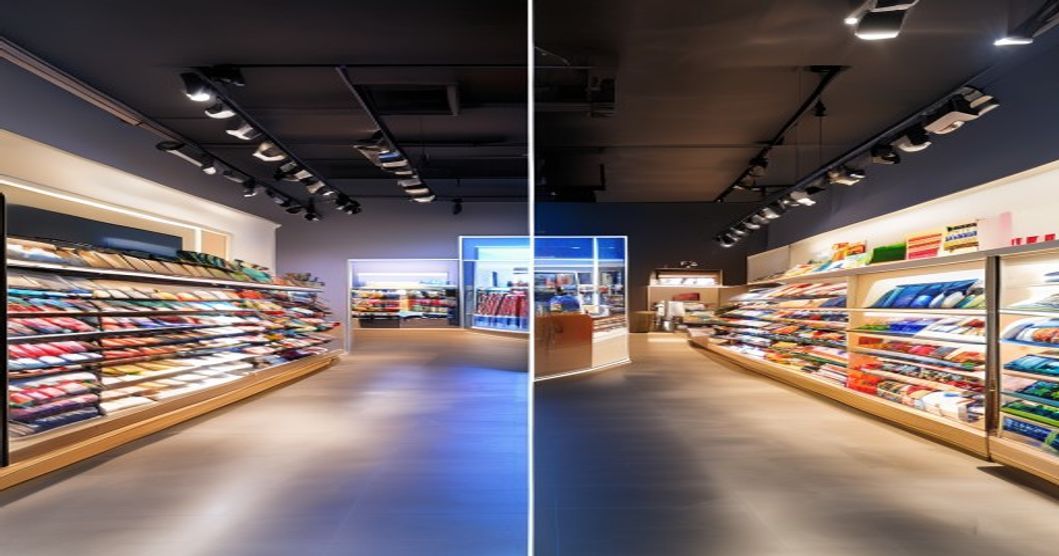
Color Temperature (Correlated Color Temperature, or CCT): Measured in Kelvin. Warm white (2700K) looks like sunset and candlelight—cozy, flattering, forgiving. Cool white (4000K–5000K) looks like midday or office light—crisp, energetic, and honest about every flaw. Most retail uses a mix. Clothing and cosmetics look best under warm light (customers tend to feel good in it). Food and jewelry pop under cool light. A smart retailer layers: warm accent lights on displays, neutral or slightly cool ambient light on the sales floor.
Beam Angle: Measured in degrees (typically 20°, 30°, 40°, or 60°). A tight 20° beam creates a bright spotlight (perfect for a single piece of art). A wide 60° beam spreads soft light over a bigger area (good for ambient fill). For retail, having different beam angles in the same room is ideal. Tighter beams for display focus; wider beams for navigation and comfort.
Here’s a mistake I see constantly: buying all the same beam angle and wondering why some areas feel flat or displays wash out. Mix them. Buy several 40° fixtures for your main merchandise wall and several 60° fixtures for general floor lighting on the same run.
Installation: Surface Mount vs. Recessed Mount vs. Hardwired
Where the rail sits on your ceiling changes everything—labor, cost, and how polished your space looks.
Surface Mount (on top of the ceiling): Rail mounts directly to the ceiling surface with brackets. Fastest, most accessible, least invasive. You need a stud finder, a level, and a drill. Most DIY-friendly option. Downside: the rail and fixtures are visible, which can feel industrial or casual. Great for lofts and contemporary retail; not so great for refined or traditional spaces.
Recessed Mount (flush with the ceiling): Rail sits inside the ceiling structure. You need access to the attic or drop-ceiling plenum and are routing power up through the cavity. More work and cost, but the visual payoff is worth it if your ceiling is visible. Looks clean and intentional.
Hardwired (no visible rails): Individual fixtures are wired straight into the electrical panel with no visible track. This isn’t really “track lighting” anymore—it’s fixed recessed or pendant fixtures. Looks most polished but offers zero flexibility. Don’t do this if you think you’ll ever want to adjust or add lights. Once it’s in, it stays in.
For a renovated retail space, budget time and money for recessed mount. For a pop-up or temporary setup, surface mount is smart.
Comparison: Which System for Your Retail Style?
- Adjust and reposition in seconds—no rewiring needed
- Zone control with multi-circuit rails; independent dimming
- LEDs are energy-efficient and run cool; lower operating cost
- Easy to add or remove fixtures as needs change
- Surface-mount option means fast, non-invasive installation
- Directional spotlights highlight merchandise clearly
- Scales from small accent walls to full retail floors
- Single-circuit monorail: all lights on/off together (unless each has a dimmer)
- Multi-circuit rail costs more upfront and installation is trickier
- Low-voltage systems need a transformer; shorter effective cable runs
- Visible rail can read as industrial (not suited to every aesthetic)
- Recessed mount requires attic access and more labor
- Fixture compatibility locked to rail brand (hard to mix later)
- Initial learning curve on beam angles and spacing for even light
Choose This If… / Choose That If…
Choose a single-circuit monorail if… you have a small accent wall or gallery-style display, you want simplicity and flexibility, and you’re fine with all lights on the same circuit. Add individual dimmers to each fixture if you want independent control without the complexity of a three-circuit rail.
Choose a three-circuit rail if… you have a full retail floor, you want to create different lighting “moods” (bright for sales hours, softer for browsing, dim for evening), or you need to separate display lighting from ambient lighting. The extra cost and wiring effort usually deliver meaningful control and flexibility.
Choose low-voltage if… design and finesse matter more than budget, you’re lighting jewelry or fine art, and your ceiling is visible (you want the rail to disappear). Budget extra for the transformer and accept the slightly higher per-fixture cost.
Choose surface-mount installation if… you’re in a rental, you want to avoid ceiling work, or you like the contemporary industrial look. It’s fast, reversible, and a DIYer can handle it.
Choose recessed-mount if… you own the space, your ceiling is finished and accessible, and you want a polished, integrated look. Plan for more labor and budget accordingly.
Who It’s For / Who It’s NOT
This lighting approach is for:
- Boutique owners and independent retailers who refresh displays regularly
- Art galleries and museums highlighting valuable pieces
- Bookstores, antique shops, and specialty stores with varied merchandise
- Restaurants or cafes with table-focused or bar accent lighting
- Showrooms and design studios where visual hierarchy is critical
- Retail spaces with evolving layouts or seasonal merchandise rotations
Track lighting is NOT ideal for:
- Warehouse or bulk-goods spaces where uniform, flat lighting is adequate
- Spaces with strict heritage or period-accurate design (visible rails may break the aesthetic)
- Outdoor or high-moisture environments (most residential-grade systems aren’t rated for it)
- Tight budgets where system cost is a major constraint
- Spaces where you need zero flexibility and won’t adjust lighting after installation
- Ultra-minimalist or very formal interiors (industrial-looking rails may clash)
Real-World Installation Tips
Before you buy anything, measure twice. Trace the exact footprint of the area you want to light. Mark where you want bright spots (displays, cash wrap) and where ambient fill is enough (aisles, fitting rooms). Sketch beam angles and spacing—understanding how light spreads at your ceiling height will help you plan coverage and avoid dark gaps between fixtures.
Check your ceiling for joists, pipes, or wiring before you commit to a mount location. Recessed mounting requires clear attic access. Surface mounting needs solid wood or strong anchors into drywall.
If you’re rewiring, hire a licensed electrician for the heavy lifting (running new circuits, adding switches). But surface-mounting the rail itself and clipping in fixtures is a competent DIYer task—it’s just level, drill, and clip.
Order one or two extra fixtures of each beam angle you use. Retail lighting evolves; having spares in a drawer saves you a reorder delay when you want to adjust a display.
Energy Cost Over Time
Here’s a helpful way to think about the choice: LED track systems cost more upfront but are dramatically cheaper to run. LED fixtures consume a fraction of the energy of halogen equivalents. Over several years of regular use, that energy savings compounds significantly, offsetting the higher initial investment.
If you have a typical retail space with 15–20 track fixtures, the multi-year energy savings from LED vs. halogen are substantial. That difference can pay for itself over time.
For most retail spaces, a three-circuit LED monorail or rail system with dimmable, warm-white (2700K) fixtures is the smart choice. It gives you flexibility today, efficiency over time, and control that makes your merchandise look its best. If you’re starting fresh, surface-mount for speed and cost-effectiveness; if your ceiling is visible and you’re committed long-term, recessed mounting looks more polished. Always use LED fixtures—the energy savings and longevity are too good to pass up. Spend a little time planning beam angles and spacing, and your retail space will feel intentionally lit, not just bright.
Ready to explore options? Check current pricing and availability of LED track systems to compare fixtures and rail systems for your space.
Related Reading
Once you nail the track system, layering in complementary lighting improves the whole room. If your retail space has any reading or detailed-work areas, check out our guide to floor lamps for reading—many retail spaces benefit from soft task lighting in waiting areas or dressing rooms.
For smaller retail spaces or those with low ceilings, our breakdown of recessed lights for low ceilings covers alternatives and hybrid approaches.
And if you’re planning a kitchen-focused retail concept (food, cookware, appliances), our article on pendant lights for kitchen islands explores how to combine overhead and accent lighting for both function and beauty.