Best Outdoor String Lights for Patio Ambiance: Top Picks for a Cozier Backyard
Disclosure: This post may contain affiliate links. We may earn a commission on qualifying purchases at no extra cost to you.
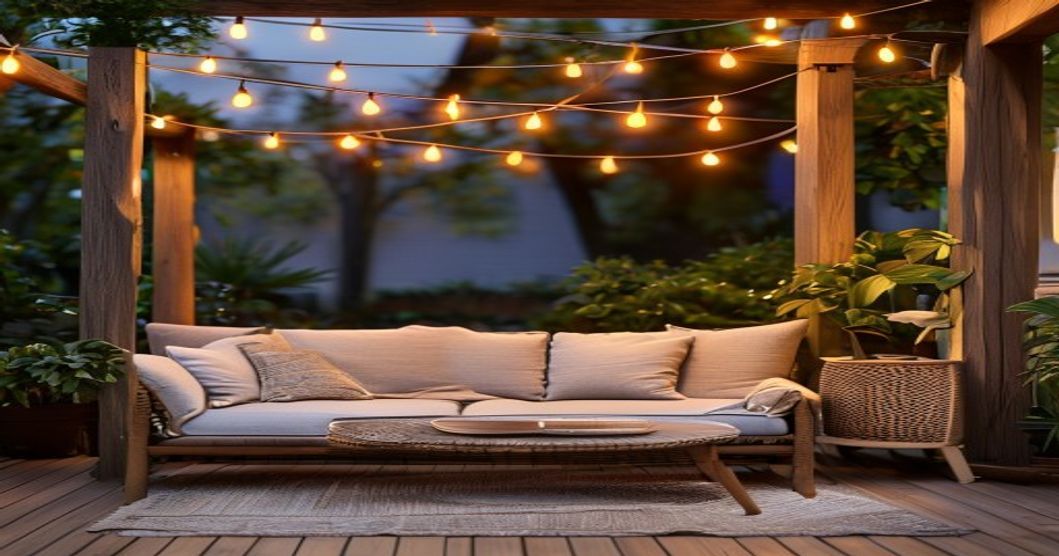
Picture this: it’s a Tuesday evening in July, the dishes are done, and you step outside hoping to just exhale for a minute — but your patio feels like a parking lot. Bare concrete, a single harsh overhead bulb, zero reason to linger. That was my backyard two summers ago. One afternoon of stringing up lights and the same space became the place my whole family actually wanted to be after dinner. The transformation was almost embarrassing in how easy it was.
Top Pick
Best for most of us who want reliable, beautiful light without any fuss. Plug it in, set a timer once, and you’re done. Every night at dusk they come on, every night at midnight they turn off. No thinking about it after that first setup.
Best Value
Perfect if you’ve got a sunny spot but running an extension cord there is a hassle or impossible. No electricity bill at all. The catch? Let them charge for a few good sunny days before your first big gathering, and expect dimmer nights when clouds roll in.
Premium
Splurge here if you’re building something permanent. Heavy wire, weather-resistant sockets, plastic bulbs that won’t shatter if the wind tosses them around. These actually stay up year-round without you worrying.
How to Choose the Best Outdoor String Lights for Patio Ambiance
Some decisions matter a ton, others are just about what looks good to you. Getting clear on the important ones before you buy saves you from a frustrating return.
Bulb Shape: G40 vs. G50 vs. S14
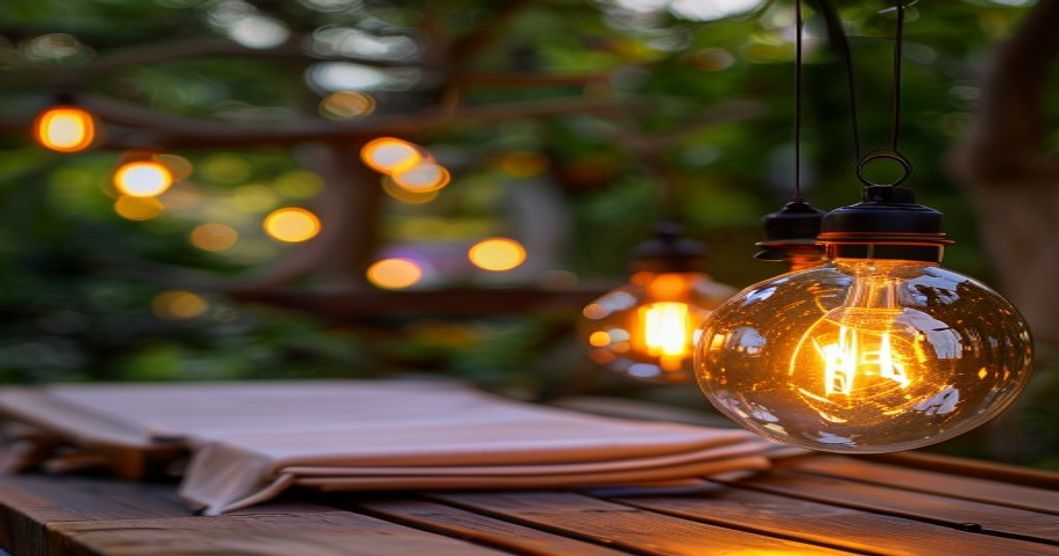
The G40 globe (about 1.5 inches across) is the goldilocks choice for most patios. Big enough to actually read as design, small enough it doesn’t look clunky. The G50 is a bit larger and puts out slightly more light per bulb — great if you’ve got high ceilings or just want fewer bulbs that feel more intentional. The S14 (teardrop Edison bulb) is the showstopper and looks amazing in rustic or industrial spaces, but it’s also more fragile than globe shapes.
Here’s what catches people off guard: color temperature matters more than you’d think. Warm white (roughly 2200K–2700K) gives you that golden, candlelit glow everyone’s actually after. Anything much above 3000K starts looking like a hospital waiting room outside. Always check the Kelvin rating before you buy.
Power Source: Plug-In vs. Solar
I’m going to be honest here: plug-in wins every single time for reliability. Solar sounds perfect in theory, but real life is messier. Overcast weeks, tree shade on the panel, a cold snap — all of that kills performance. If you can access an outdoor outlet or safely run an outdoor-rated extension cord, go plug-in and add a timer. Done. You’ll never think about it again.
Solar earns its spot when there truly is no power option nearby — a pergola way out back, a fence line at the property edge, a garden path nowhere near the house. Just go in knowing that cloudy days or shade will dim things down.
Weather Rating (IP Rating)
This is the thing most of us skip and then regret. The IP rating tells you how much dust and water the lights can handle. For a covered patio where rain rarely hits the actual strands, IP44 is fine. For lights strung out in the open with nothing overhead? IP65 is safer — it handles rain, sprinkler spray, and damp morning air without issues. Anything labeled “outdoor” but below IP44 should make you suspicious.
Strand Length and Daisy-Chain Limits
Measure your space first. Seriously — walk it out, mark where you’re hanging from, and add a little extra for the natural sag. Buying a strand that’s too short is a genuinely annoying evening. Strands come in different lengths, so check what’s available. If you’re linking multiple strands together, pay attention to the maximum daisy-chain limit listed — exceeding it is an actual electrical risk, not just a vague warning on the package.
For more ideas on layering light throughout your home, check out our guide to best table lamps for living room ambiance — the warm-white principle works just as well indoors.
| Type | Best For | Durability | Running Cost |
|---|---|---|---|
| Plug-In LED G40 Globe | Most patios, regular use | High (LED lasts forever) | Very low |
| Solar-Powered LED | Spots with no outlet, occasional use | Medium (depends on sun) | Zero |
| Commercial-Grade Shatterproof | Permanent setups, tough weather | Very High | Very low |
| Incandescent Globe | Short-term, budget options | Low (bulbs burn out) | Higher |
| Edison S14 Filament | Rustic or industrial patios | Medium | Low (if LED) |
Hanging Layouts That Actually Work
How you hang them matters just as much as what you pick. A single line of lights along one fence looks flat. A crisscross canopy overhead feels intentional and transforms the whole mood. Here are the three setups worth trying:
- Overhead canopy (the crowd favorite): Run strands in parallel lines or a grid between posts, pergola beams, or fence tops. Space them about 18–24 inches apart for a full, even glow from above.
- Perimeter wrap: Drape strands along fence rails or porch railings to define the space and add depth without dominating the view. Pairs nicely with canopy lights above it.
- Catenary drop (one swooping strand): One long strand hung high in the middle and anchored lower on each side. Simple, romantic, surprisingly effective for a small balcony or narrow porch.
If you’re thinking about how this fits into your whole outdoor lighting plan, our breakdown of best wall sconces for bedroom accent lighting covers the same idea — layering warm, focused light into specific zones instead of just flooding everything evenly.
- Transforms a space for pretty minimal money
- LED versions are cheap to run and last for years
- Most just plug in — no electrician needed
- You can take them down or rearrange anytime
- Work with basically any outdoor style
- Dimmable versions give you mood control
- Solar ones struggle in cloudy or shady climates
- Glass bulbs shatter if wind knocks them together
- Cheap strands often have bulbs you can’t replace
- Setting up an overhead canopy needs posts or a pergola
- Overloading a daisy-chain is a real safety issue
Who These Lights Are For — and Who Should Look Elsewhere
Great fit if you…
- Have a patio, deck, or backyard you want to use after dark
- Like hosting outdoor dinners or just spending quiet evenings outside
- Want soft, warm light instead of harsh floodlights
- Love the idea of an upgrade that looks way more expensive than it is
- Have a pergola, fence, or are happy adding a couple of shepherd’s hooks
Maybe skip if you…
- Need bright task lighting for cooking or reading outside — these are purely for mood
- Live somewhere brutally cold with no covered storage (strings need to come down or be commercial-grade)
- Don’t have an outdoor outlet and your yard doesn’t get much sun
- Rent and your landlord doesn’t allow hanging anything permanent or even temporary
A Few Things I Wish Someone Had Told Me Earlier
Get a separate outdoor smart plug or mechanical timer. It costs almost nothing and means your lights turn on at dusk every single night automatically. Doing it by hand gets old in about a week — the timer is what makes the whole thing feel effortless instead of like a chore.
Also: shatterproof plastic globe bulbs look basically the same as glass if you’re just glancing at them, but they survive thunderstorms that would snap regular glass strands in half. If you live somewhere with summer storms, that swap is worth every penny.
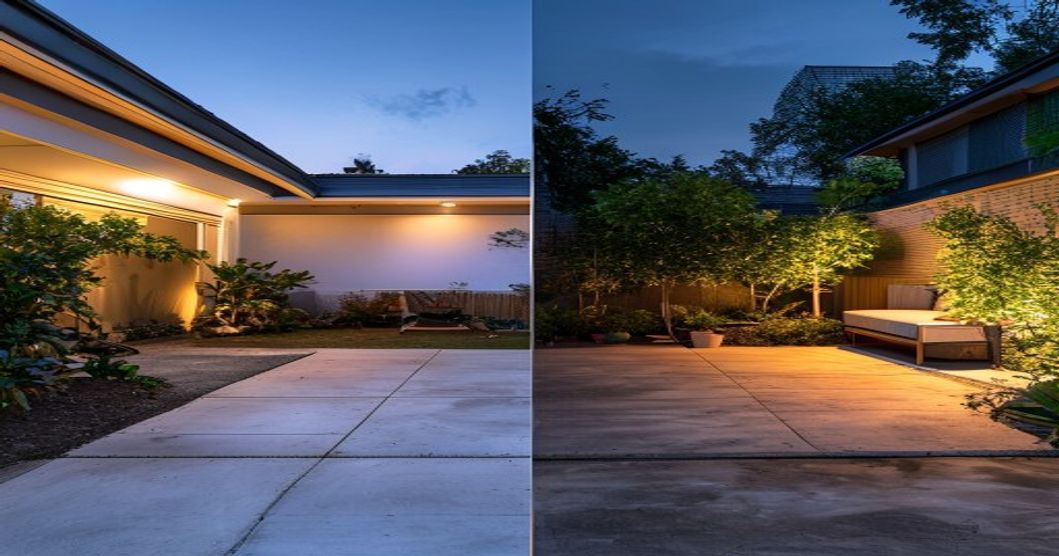
One more thing: if you’re really thinking about outdoor lighting, don’t put all your eggs in the overhead string lights basket. Add some lower-level light too — solar path lights along the edge, a couple of lanterns on the table, maybe a wall fixture near the door. The string lights do the heavy lifting for mood, but some lower light stops it from feeling like one dramatic spotlight. That same layering idea applies indoors too — our article on best track lighting for retail spaces gets into the whole “layers of light” concept if you want to dig deeper.
Outdoor string lights are one of the easiest, highest-impact things you can do to a patio. The right set — warm white, LED, decent weather rating, and a timer — turns a forgettable space into somewhere you actually want to be at night. For most people, plug-in LED G40 globes are the obvious starting point. Go shatterproof if you’re in a windy area or want them staying up year-round. Check Amazon for current prices and read what recent buyers say before you decide.
Disclosure: This post contains affiliate links. As an Amazon Associate I earn from qualifying purchases. This means if you click a link and make a purchase, I may earn a small commission at no extra cost to you. All opinions and recommendations are my own.