Best Desk Lamp for Work & Study: Complete Buyer’s Guide 2025
Disclosure: This post may contain affiliate links. We may earn a commission on qualifying purchases at no extra cost to you.
Finding the right desk lamp can transform your work-from-home setup, improving focus and reducing eye strain. A good desk lamp isn’t just about brightness—it’s about the right color temperature, adjustability, and design to suit your workspace and work style. In this guide, we’ll walk you through what makes a desk lamp worth your money and help you pick the one that fits your needs.
Top Picks: Our Recommended Desk Lamps by Category
Best Choice
Perfect for anyone spending extended hours at a desk. These lamps combine energy efficiency, adjustable brightness, and adjustable color temperature so you can optimize light for different times of day and tasks. The adjustable arm lets you position light exactly where you need it, reducing glare on screens and preventing shadows.
Explore Options →
Best Value
Ideal if you use smart home devices (Alexa, Google Home) and want seamless automation. Smart desk lamps let you dim, change color temperature, and even set schedules via app or voice commands. Expect smart lamps to cost more than manual options, but convenience and integration may justify the investment for heavy remote workers.
Budget Pick
Best for students and budget-conscious users who value simplicity. Fixed lamps don’t adjust, but quality designs position light efficiently and look clean on a desk. They’re typically more affordable than adjustable alternatives and require no setup or learning curve—just plug in and turn on.
What to Look for When Buying a Desk Lamp
Brightness and Lumens: How Much Light Do You Actually Need?
Brightness is measured in lumens. For general desk work (writing, computer tasks), most people find 400–600 lumens comfortable without excessive glare. If you do detailed work (drafting, jewelry making, medical documents), aim for higher brightness levels in the 600–1000 lumen range. Many quality desk lamps let you adjust brightness, so you can dial it down for comfort during evening work and up during intense focus sessions. Look for dimmable options if your budget allows.
Color Temperature: Warm vs. Cool Light
Color temperature is measured in Kelvin (K). Here’s the breakdown:
- 2700K–3000K (Warm White) — Softer, yellowish light. Relaxing and easier on eyes during evening. Best for creative work and reading.
- 4000K–5000K (Neutral White) — Balanced, natural light. Good all-purpose choice for general office work.
- 5000K–6500K (Cool/Daylight White) — Bright, bluish light. Boosts alertness and focus; ideal for analytical tasks, coding, and daytime work.
The best desk lamps offer adjustable color temperature, so you can shift from cool during work hours to warm in the evening, reducing blue light exposure and supporting better sleep. This flexibility is one of the most underrated features in desk lighting.
Adjustability: Fixed vs. Articulating Arm
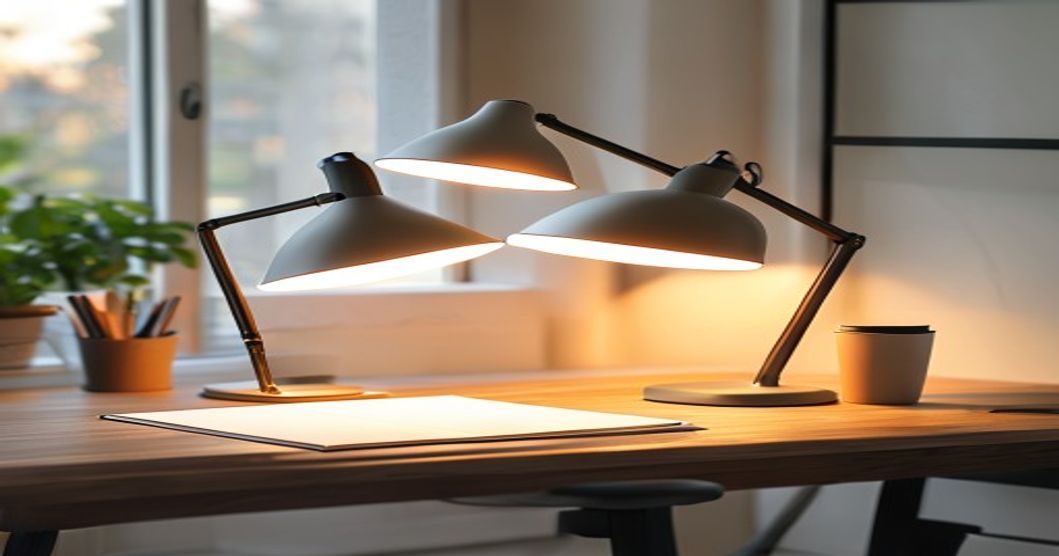
A fixed lamp is stationary and great for small desks or minimalist setups. An articulating arm (gooseneck or swivel base) lets you angle light exactly where you need it, preventing shadows on your work and reducing screen glare. If you move around your desk or work on different projects, an adjustable lamp is worth the extra cost. Look for smooth, lockable joints that hold position securely.
Energy Efficiency and Heat Output
Modern desk lamps should use LED technology, which consumes significantly less electricity than older incandescent bulbs and generates minimal heat. LED bulbs last many thousands of hours, so you’re replacing the lamp itself rather than frequent bulbs. This makes LED lamps cost-effective over time, despite any higher upfront cost. If you’re running your lamp for extended daily use, LED efficiency adds up to meaningful savings.
Smart Features: Are They Worth It?
WiFi-enabled desk lamps integrate with smart home systems and offer app control, voice commands, and automated schedules. You can set the lamp to gradually brighten in the morning or dim in the evening. If you’re already invested in smart home tech (Alexa, Google Home, Apple HomeKit), a compatible lamp adds convenience. However, smart lamps cost more and require stable WiFi. For straightforward task lighting, a manual adjustable lamp is equally effective and more reliable.
Comparison Table: Desk Lamp Types at a Glance
| Lamp Type | Best For | Typical Price Range | Key Advantage |
|---|---|---|---|
| Manual Adjustable Arm (LED) | General office work, flexibility needed | Budget-friendly; check current pricing | Precise positioning, reliable, affordable |
| Smart WiFi Desk Lamp | Home automation enthusiasts, convenience seekers | Premium pricing; check current options | App control, voice integration, scheduling |
| Fixed Minimalist Lamp | Students, small desks, budget buyers | Most affordable option; verify current prices | Simple, compact, lowest cost |
| Premium Designer Lamp | Aesthetics-focused, long-term investment | High-end pricing; varies by designer | Statement piece, superior build quality, timeless design |
Pros and Cons: What You Gain and Lose with Each Type
- LED technology saves energy compared to older incandescent technology
- Adjustable brightness reduces eye strain
- Color temperature control adapts to time of day
- Articulating arms position light precisely
- LED bulbs have extended lifespans
- Smart lamps integrate with home automation
- No significant heat output (safe for papers, materials on desk)
- Quality lamps cost more upfront than basic options
- Smart lamps require WiFi and app setup
- Adjustable arms may loosen over time with heavy use
- Some cheaper LEDs may have inconsistent color quality
- Fixed lamps lack flexibility for moving work
- Premium designer lamps are niche and costly
- Touch controls can be less reliable than physical switches
How to Position Your Desk Lamp to Avoid Glare and Shadows
Even a great lamp performs poorly if positioned wrong. Here’s how to set it up for comfort:
- Side positioning: Place the lamp to the left or right of your monitor, not directly behind. This prevents light reflecting off the screen into your eyes.
- Angle for your task: If reading documents, angle the light down at roughly 45 degrees. For computer work, position slightly higher to avoid monitor reflections.
- Height matters: The lamp top should be roughly at eye level or slightly above when seated. Too low creates shadows on your work; too high causes glare.
- Pair with ambient light: Don’t rely on desk lamp alone. Add soft ceiling or wall lighting to reduce contrast and strain. A room lit only by a desk lamp creates harsh shadows elsewhere.
- Use a diffuser: A frosted or fabric shade diffuses light evenly, reducing harsh spots and glare. Bare bulbs are rarely ideal for desk work.
Desk Lamp Features to Prioritize vs. Skip
Worth the Investment
- Dimmability: Lets you adjust brightness for different tasks and times of day.
- Adjustable color temperature: Shifts from warm to cool; reduces blue light at night.
- Articulating arm: Flexible positioning prevents glare and shadows.
- USB charging port: Some lamps include a built-in USB port for phones—handy for cable management.
- Weighted base or clamp: Prevents tipping, especially with adjustable arms.
Nice-to-Have But Not Essential
- Smart/WiFi controls: Convenient if you have other smart home devices, but not necessary for good lighting.
- Touch controls: Looks sleek but can be less reliable than physical switches over time.
- Memory presets: Some smart lamps remember your preferred brightness and color for different times. Useful but not essential.
Connecting Your Desk Lamp to Your Decor Style
A desk lamp is functional furniture that sits in your visual field for hours daily—so aesthetics matter. Here’s how to choose one that complements your workspace:
- Modern/Minimalist: Look for clean lines, matte finishes (black, white, gray), and simple geometric shapes. Adjustable arm lamps in brushed metal are ideal.
- Industrial: Metal bases, exposed bulbs (though frosted for function), and darker finishes. Edison-style bulbs work if your lamp design supports proper shading.
- Mid-Century Modern: Tapered legs, warm wood tones, and brass or copper accents. Designers like Artemide and Hay make lamps that fit this aesthetic.
- Scandinavian: Light wood, neutral tones, and functional simplicity. Avoid visual clutter; the lamp should feel unobtrusive.
- Eclectic/Colorful: Don’t be afraid of colored bases or shades if they coordinate with your desk accessories. Just ensure the light itself (the bulb) produces proper white light for task work.
Pro tip: Your desk lamp doesn’t have to match other furniture exactly—complementary finishes (e.g., matte black lamp on a white desk, or brass on walnut) often look more intentional than exact matches.
Related Reading: Expand Your Home Lighting Strategy
A desk lamp is one piece of your overall lighting ecosystem. To create a complete, well-lit home office, explore these complementary guides:
- Best LED Strip Lights for Every Room: Complete Buyer’s Guide & Reviews — Add ambient or accent lighting around shelves or behind monitors.
- Best Smart Bulbs for Home Lighting: Complete Guide to Upgrading Your Space — If you’re upgrading your whole office to smart lighting, start here.
- Best LED Strip Lights for Home Decor: A Complete Buyer’s Guide — Use subtle accent lighting to define your workspace visually.
Who This Buying Guide Is For (And Who It Isn’t)
This Guide Is Perfect If You:
- Work from home or spend significant time daily at a desk
- Experience eye strain or headaches from poor lighting
- Want to reduce energy consumption (switching to LED)
- Care about both function and aesthetics in your workspace
- Are upgrading from an old or inadequate desk lamp
- Want to optimize light for focus and productivity
This Guide May Not Be For You If You:
- Work in a brightly lit office with professional overhead lighting
- Only use your desk occasionally
- Prefer minimal accessories and want to avoid adding items to your desk
- Have severe visual impairments requiring specialized medical lighting (consult a vision specialist)
- Are on a very tight budget
- Have limited desk space and can’t accommodate even a compact lamp
Final Recommendation: Which Desk Lamp Should You Buy?
If you work at a desk regularly, invest in an LED desk lamp with adjustable brightness and ideally color temperature control. A manual adjustable-arm lamp offers excellent value and reliability. It will improve focus, reduce eye strain, and provide cost benefits through energy efficiency.
If you value convenience and already use smart home devices, a WiFi-connected desk lamp is worth considering for app control and scheduling. For budget shoppers, a quality fixed LED lamp will serve you well—just ensure it has a frosted shade and adequate brightness.
Avoid very low-cost lamps that lack dimmers or proper diffusion; they often have quality issues. Your eyes spend too many hours under this light to compromise on quality.
Start Your Search on Amazon →
Affiliate Disclosure: This article contains affiliate links. If you purchase through these links, we may earn a commission at no additional cost to you. As an Amazon Associate I earn from qualifying purchases. All recommendations are based on product value and merit, not affiliate commission.