Smart Bulbs for Staircase Accent Lighting Under $50: The Adjustable Color Temperature Guide for 2026
Disclosure: This post may contain affiliate links. We may earn a commission on qualifying purchases at no extra cost to you.
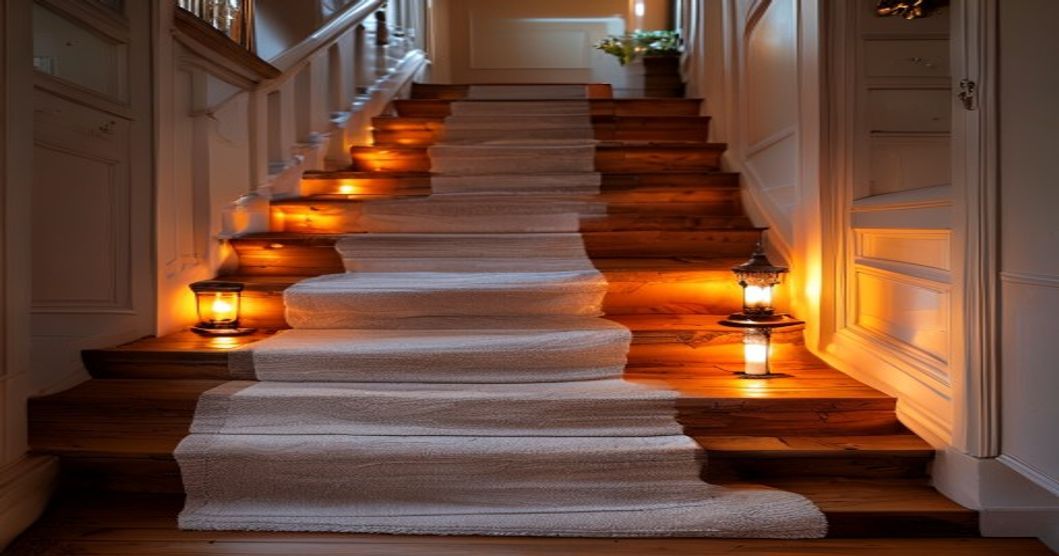
Most people light their staircases with a single overhead fixture set to one brightness and one color—usually a harsh white or, worse, an afterthought yellowed bulb that’s been there for years. This kills the warmth and safety of the space. A staircase deserves intentional lighting: something that guides you safely at night but also makes the climb feel pleasant and cozy during the day.
Tunable white smart bulbs (adjustable 2700K–6500K) under $50 are the best value for staircase accent lighting in 2026. They let you shift from cozy amber in the evening to bright white during the day without touching a switch, improve safety, and feel like a small luxury without the price tag.
The Staircase Lighting Problem Nobody Talks About
Staircases are one of the hardest rooms to light well. Too dim, and you trip. Too bright, and it feels institutional. Too yellow, and it clashes with modern decor. Too white, and it feels cold at 10 p.m. when you’re padding down for a glass of water.
Here’s the real issue: most homes have one fixed fixture, one bulb, one mood. That worked in 1995. Today, smart bulbs with adjustable color temperature let you have the right light for the right moment—and you only have to set it up once through an app.
What Makes a Smart Bulb Right for Staircases?
Color temperature range. You want warm (2700K–3000K) for evenings and cool (4500K–5000K) for daytime. Bulbs that cover 2700K–6500K give you the full spectrum.
Dimming capability. A bulb that dims smoothly from 1% to 100% feels luxurious and practical. Cheap bulbs often flicker or have a minimum brightness of 20%, which defeats the purpose.
Wi-Fi or Bluetooth. Wi-Fi bulbs let you control them from anywhere and set schedules. Bluetooth is simpler, cheaper, and works without a hub, but the range is shorter (30 feet or so).
Wattage equivalent. For accent lighting, 40W–60W equivalent is usually enough. A 75W equivalent is brighter but uses a bit more power.
Price. Under $50 for a single bulb means you can afford to buy a few for different fixtures without guilt.
Head-to-Head: Tunable White vs. RGB Smart Bulbs for Stairs
Before you pick a specific bulb, decide: do you want just warm-to-cool adjustments, or do you want the ability to throw reds, blues, and greens onto your staircase?
| Feature | Tunable White (2700K–6500K) | RGB Color-Changing |
|---|---|---|
| Best for staircase look | Natural, warm, cozy; blends with home decor | Fun party effects; not ideal for everyday stairs |
| Price under $50 | Yes, common; $15–$40 per bulb | Rare; usually $40–$70+ per bulb |
| Energy use | Very low; 8–12W typical | Slightly higher; LEDs for each color channel |
| App complexity | Simple: slider for brightness and warmth | Complex: color picker, scenes, animations |
| Voice control | Yes, “Make stairs warmer” or “Brighten stairs” | Yes, but overkill for stairs |
| Lifespan | 15,000–25,000 hours typical | Similar, but more components = more failure points |
Verdict: Tunable white is the smarter choice for stairs. You get the flexibility, the cozy appeal, and the price point without paying for party tricks you’ll never use on a staircase.
Key Specs Comparison: What to Look For
When you’re comparing tunable white bulbs under $50, focus on these real-world details:
- Color temperature range: 2700K–6500K is ideal. Anything narrower (e.g., 3000K–5000K) gives you less flexibility.
- Minimum brightness: Can it dim to 1%–10%? Or does it bottom out at 20%? The lower, the better for nighttime safety without wasting light.
- Dimming smoothness: Read reviews for flicker. A jerky, stuttering dim is annoying and cheap-feeling.
- Connection type: Wi-Fi (2.4GHz) for automation and remote access; Bluetooth for simplicity. No hub needed for either, but Wi-Fi bulbs often cost $5–$10 more.
- Wattage equivalent: 40W–60W equivalent for most staircases. Check your fixture’s maximum wattage first.
- Smart home compatibility: Does it work with Alexa, Google Home, or Apple HomeKit? Not all cheap bulbs do.
Why Adjustable Color Temperature Matters on Stairs
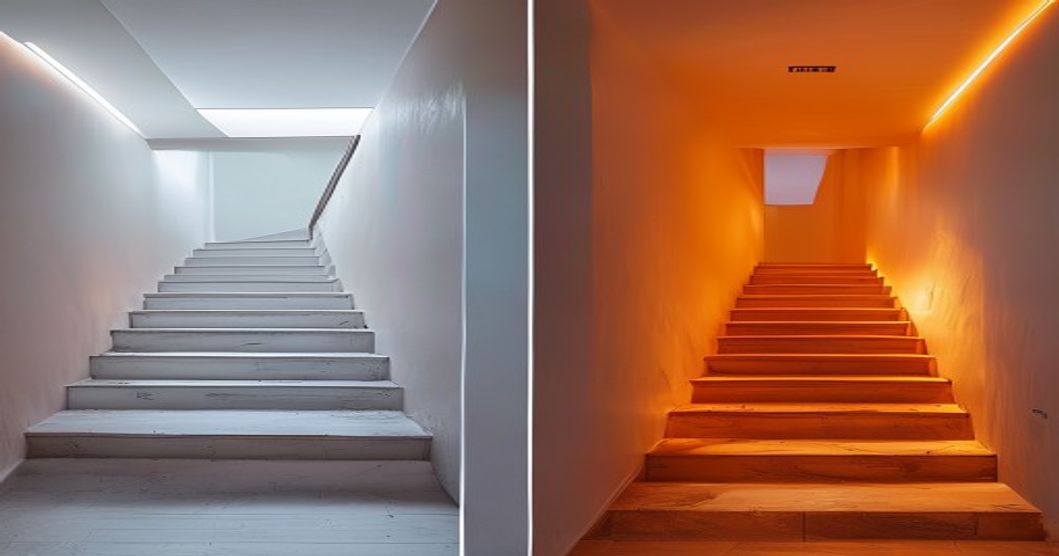
Here’s a before-and-after scenario: imagine your staircase lit by a single warm bulb all day. In the morning, it looks dull and yellow. By evening, it’s cozy but not bright enough to read by. With a tunable white bulb, you can set a routine that shifts from 4500K (crisp, alert) at 7 a.m. to 3000K (warm, calm) by 8 p.m. You never touch a switch.
From a safety angle: soft, warm light at night guides you without shocking your eyes if you’re half-asleep. Brighter, cooler light during the day prevents missteps on unfamiliar stairs (especially important if you have guests or kids).
From a design angle: warm accent lighting on wood stairs creates depth and coziness. A single harsh white fixture flattens the space and makes it feel like a hotel hallway.
Comparing Real-World Options: Wi-Fi vs. Bluetooth
Choose a Wi-Fi bulb if: You want to set daily schedules (warm at 6 p.m., bright at 6 a.m.), control it from your phone when you’re away, or integrate it into your whole-home automation. These usually run $20–$35 per bulb.
Choose a Bluetooth bulb if: You want a lower price ($12–$20), no Wi-Fi network worries, and a simple remote control. They’re great if you just want to dim or warm up your stairs without the app complexity. Downside: you can’t automate or control from far away.
For a staircase, where daily schedules and preset moods make a big difference, Wi-Fi is worth the extra few dollars. You’ll use the automation feature almost immediately.
- Warm accent light boosts home coziness instantly
- Adjustable color temp fixes harsh overhead fixtures
- Smart scheduling saves money (auto-off when you sleep)
- Dimming improves safety at night
- No electrician needed; just screw in and connect
- Long bulb life (20,000+ hours) spreads cost over years
- Older dimmers may not work smoothly with smart bulbs
- Wi-Fi bulbs depend on a stable 2.4GHz network
- Setup takes 10–15 minutes (app download, pairing, naming)
- Some budget bulbs have slow app response or flicker
- Not compatible with all smart home platforms
- Requires smartphone to unlock full features
Who This Works For (and Who It Doesn’t)
Perfect for:
- Homemakers who want a cozy, intentional home without major renovation
- Anyone with an older staircase that needs a warmth boost
- Homes with open floor plans where stair lighting affects the overall feel
- People who climb stairs multiple times a day and want it to feel inviting
- Budget-conscious decorators who want a big visual impact for under $50 total
- Homes already using Alexa or Google Home (easy integration)
Not a good fit for:
- Homes with very old, hardwired dimmers (may not be compatible)
- Households with no Wi-Fi or an unreliable network
- People who hate app complexity and want pure mechanical simplicity
- Renters in shared buildings where changing bulbs might violate terms
- Anyone primarily wanting RGB party colors (RGB is better suited; tunable white is more subtle)
- Basements or exterior stairs in extreme cold (some bulbs lose efficiency below freezing)
The Setup and Real-World Experience
Installation is honest-to-goodness simple: unscrew the old bulb, screw in the new one. Flip the wall switch to ON and leave it there (the app controls brightness from then on, not the switch).
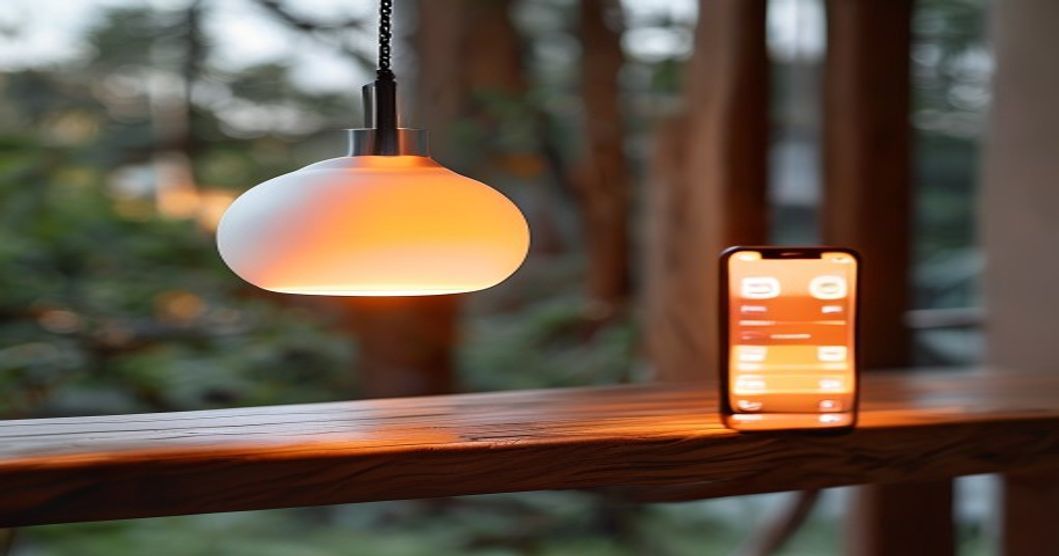
Download the app (usually takes 2 minutes), scan the bulb code, connect to your Wi-Fi, name the bulb (e.g., “Staircase Warm”), and you’re done. Many apps let you set a sunrise/sunset routine automatically: the bulb warms up in the evening and brightens during the day without you thinking about it.
First-time users often say they didn’t expect to love it this much. A simple thing like dimmed warm light when you go downstairs at night feels like a small luxury and actually improves safety.
Related reading: if you’re lighting other parts of your home, check out our guides on smart bulbs for hallway motion sensor and dimming, smart bulbs for closet lighting with motion sensor and battery backup under $40, and smart bulbs for kitchen under cabinet lighting with motion sensor and voice control. They use similar tech and play well together.
Common Mistakes to Avoid
Mistake 1: Buying the cheapest RGB bulb thinking it’ll work for stairs. You’ll end up with a $50 bulb that’s overkill for its purpose and still doesn’t look as good as a $20 tunable white.
Mistake 2: Forgetting to check if the bulb fits your fixture. Not all bulbs fit all sockets (E26 vs. E17, standard vs. candelabra). Confirm before checkout.
Mistake 3: Installing on a dimmer switch and expecting smooth dimming. Old dimmers and cheap smart bulbs often flicker together. If you have a dimmer, either upgrade to a smart bulb explicitly marked “dimmer compatible,” or turn the dimmer all the way up and control brightness through the app only.
Mistake 4: Setting the color temperature too warm during the day. A 2700K light in broad daylight looks sickly. Use schedules: warm in the evening, cooler during the day.
Price Range Breakdown
For a typical staircase with 3–5 fixture positions, here’s what you’re looking at:
- Budget option (Bluetooth, basic app): $12–$18 per bulb. Works fine if you have one or two fixtures and don’t mind manual control.
- Mid-range (Wi-Fi, good app, scheduling): $20–$32 per bulb. Best overall value for most stairs. You get automation and reliability.
- Premium (Wi-Fi, professional app, voice control, faster response): $35–$50 per bulb. Only worth it if you’re a smart home enthusiast or want integration with other premium devices.
If you buy 3 bulbs at the mid-range price, you’re spending $60–$96 total—still under $50 per bulb and well worth it for a space you use multiple times daily.
Energy and Longevity
Smart bulbs use 8–12 watts (vs. 60 watts for an old incandescent). Even if you run them 5 hours a day, that’s less than $2 a month per bulb in electricity. Over a 20,000-hour lifespan, you’ll replace the bulb maybe once every 10 years.
The upfront cost is higher than a traditional bulb, but the long-term cost per hour of light is actually lower. Plus, you’re getting features (dimming, color, automation) that a $2 bulb can never offer.
Tunable white smart bulbs (2700K–6500K) under $50 transform a plain staircase into a warm, intentional space that adapts to your day. Buy mid-range Wi-Fi bulbs ($20–$32 each), set a sunset-to-sunrise schedule, and enjoy the payoff: a cozier home, better safety, and lower energy bills. Start with one bulb to test the setup, then add more if you love it. You will.
Disclosure: This article contains affiliate links. We may earn a commission if you purchase through these links at no extra cost to you. As an Amazon Associate I earn from qualifying purchases. This helps support our home decor and lighting research.